Drones: Global Advances and the Brazilian Context
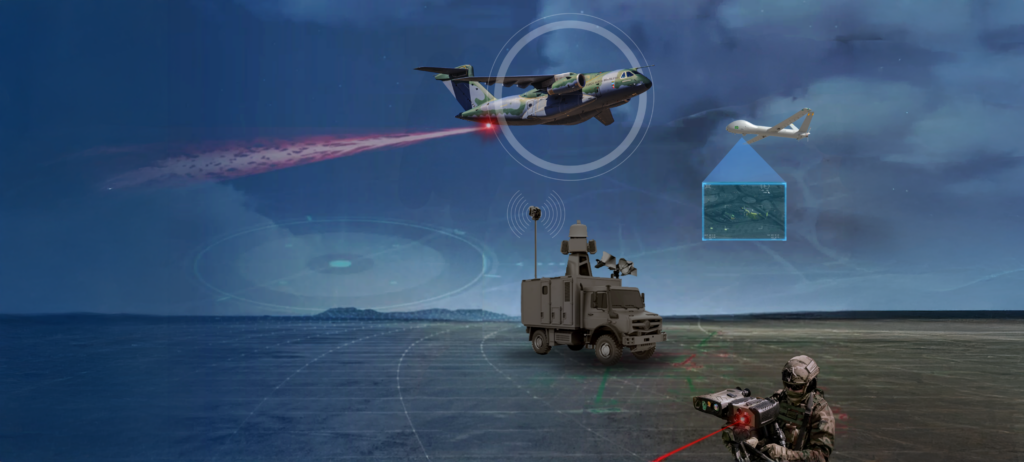
Remotely Piloted Aircraft (RPA), commonly known as drones, have assumed a strategic role in modern defense operations. Originally conceived for reconnaissance missions, these platforms have evolved to integrate advanced technologies such as artificial intelligence, multispectral sensors, real-time communication systems, and electronic support capabilities. This technological leap has cemented their status as essential assets for surveillance, intelligence, and tactical response missions.
In recent years, the deployment of RPAs has gained prominence in large-scale operations—notably in the Ukraine-Russia conflict and the Middle East—demonstrating their efficacy in Intelligence, Surveillance, and Reconnaissance (ISR) missions. These missions encompass real-time decision support, target tracking, aerial logistics, and close support for ground forces. While enhancing the operational capabilities of states, the proliferation of drones also introduces new technical and operational challenges.
The Role of ISR in Contemporary Operations
ISR is a core concept in modern warfare, involving the coordinated use of sensors, data collection, and integrated analysis to provide precise situational awareness. This real-time intelligence empowers operational forces to make rapid, informed decisions across complex environments, ranging from humanitarian relief and environmental surveillance to border protection.
The flexibility and range of Remotely Piloted Aircraft allow for the efficient application of ISR in interagency operations, counter-trafficking efforts, environmental monitoring, and the surveillance of strategic areas. With these capabilities, drones act as true force multipliers across various operational theaters.
Brazil and Drone Technology: A Path Toward Consolidation
Brazil has been scaling the deployment of RPAs within its security and defense forces, placing a sharp focus on territorial surveillance and technological modernization. Established in 2008, the National Defense Strategy anticipated the strengthening of the defense industrial base and the mastery of aerospace technologies, even before the widespread adoption of drone technology.
How RPAs are Deployed Across Multiple Fronts in Brazil:
Monitoring Sensitive Areas: Surveillance of regions such as the Amazon, focusing on border security, environmental enforcement, and combating transnational illicit activities.
Interagency Support: Assisting operations involving the Armed Forces, Federal Police, IBAMA, and other public bodies.
Law and Order Assurance: Participating in Law-and-Order Assurance (GLO) operations and providing public security support during major events.
Operational Highlight: The Hermes 900 and its Contribution to the FAB
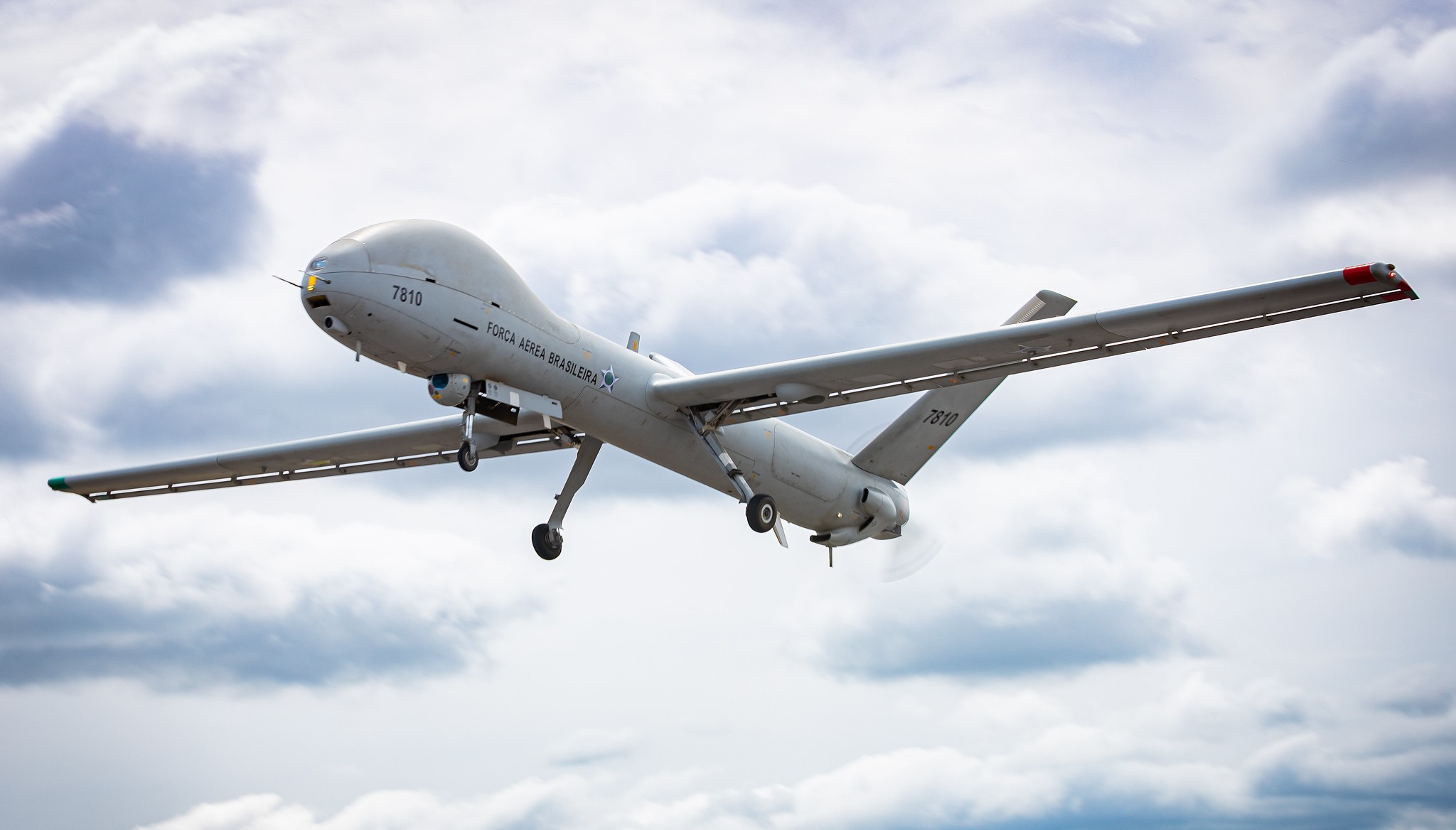
Among the systems currently in service in Brazil, the Hermes 900 stands out for its operational capabilities. The Brazilian Air Force (FAB) currently operates these aircraft through the Horus Squadron, based in Santa Maria, Rio Grande do Sul.
With an endurance exceeding 30 hours and equipped with electro-optical sensors, infrared systems, and synthetic aperture radar, the Hermes 900 conducts aerial surveillance, tactical reconnaissance, and support for joint force operations. It is also deployed in emergency situations, such as monitoring areas at environmental risk, and in coordinated actions with manned aircraft.
Its versatility extends beyond the military sphere to include coastal surveillance, civil defense support, and remote area mapping.
Drones as Strategic Instruments of Sovereignty
Brazil does not currently employ armed drones. This decision stems from a combination of factors. Strategically, national defense doctrine prioritizes territorial protection and deterrence, whereas the use of armed drones is often associated with offensive postures that do not reflect Brazil’s regional reality.
Political and social factors also play a role, including a preference for investing in passive defense and surveillance technologies, alongside a commitment to maintaining Brazil’s international image as a peaceful and cooperative nation within Latin America.
The evolution of drones in Brazil demonstrates a solid path toward modernization and technological integration. With platforms such as the Hermes 900, the country reinforces its capacity to protect its territory, anticipate threats, and operate in an integrated manner with various agencies.
Investing in surveillance and intelligence systems offers tangible gains in security, operational efficiency, and national sovereignty. The global landscape points to an increasing valuation of data, sensors, and interoperability—areas where Brazil is already making firm strides.
Learn more about our Remotely Piloted Aircraft solutions https://www.ael.com.br/sistemas-aeroespaciais/sistemas-de-aeronave-remotamente-pilotados-sarp/
Imagem
Sargento Muller Marin / Força Aérea Brasileira