Contemporary military conflicts unfold simultaneously across multiple domains, integrating capabilities on land, in the air, at sea, in space, and within cyberspace. The wars in Russia-Ukraine and the Middle East have demonstrated the efficacy of combining high-tech capabilities—such as unmanned systems, autonomous platforms, and electronic warfare tools—with the agile employment of troops. New technologies accelerate decision-making and enable rapid, decisive actions. For example, in Ukraine, the use of drones for surveillance and precision strikes integrated real-time sensor data with artificial intelligence, allowing smaller forces to neutralize numerically superior threats.
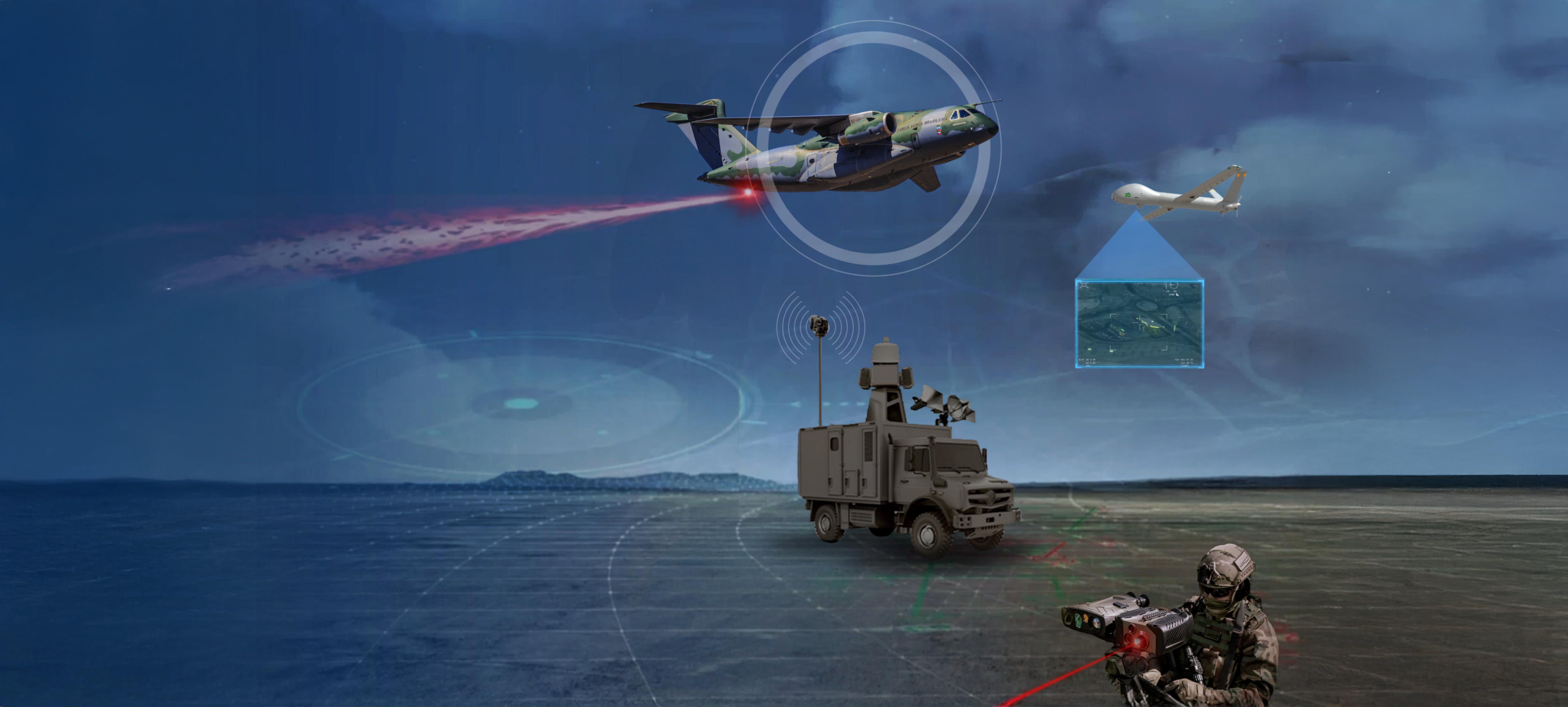
To achieve this, the sensor-to-shooter cycle must be closed as rapidly as possible. This begins with efficient threat detection, intelligence processing, and the execution of precision strikes—often utilizing drone swarms, guided munitions (potentially AI-assisted), and electronic warfare systems to disrupt enemy communications and defenses.
This approach is perfectly exemplified by a special unit of the Israel Defense Forces, Unit 888 Refaim, or “Ghost” in Hebrew. Operating ahead of conventional forces to detect, engage, and destroy threats, Refaim acts across multiple dimensions, whether against land, naval, air, space, or even cyber targets. Its agility, independence, and massive use of autonomous systems allow for rapid adaptation to defeat enemy cells. Its “Ghost” nickname stems from the fact that its presence is often only perceived when the target is struck, for example, by a kamikaze drone.
Electronic warfare, in turn, is increasingly present on the battlefield, challenging traditional command structures. It is used both to protect networks and radars and to jam enemy systems, ensuring the effectiveness of the sensor-to-shooter cycle. Operation Midnight Hammer, launched by the United States against Iranian nuclear facilities, utilized electronic jamming techniques across the entire electromagnetic spectrum, alongside the employment of specialized electronic warfare aircraft such as the EA-18G Growler, to destabilize Iranian radar and communication systems, allowing B-2 bombers to penetrate enemy airspace undetected and strike their targets with precision.
In short, the integration of sensors, electronic warfare, and autonomous systems is essential for effective results in modern combat, affording commanders multiple strategic and tactical options while creating dilemmas for adversaries. However, as evidenced in ongoing conflicts, technology must be incorporated alongside well-trained troops and up-to-date military doctrine. Technology is a combat power multiplier, not a replacement for troops.
Plaintiff: Jorgito Stocchero, PhD – Business Director, Sensors and Electronic Warfare