Technology and Real-Time Data
Protecting the Amazon and Brazilian borders is not merely a state mission — it is an imperative of sovereignty. In an increasingly complex and dynamic geopolitical scenario, the use of real-time data, such as images and video generated by diverse sensors, becomes a central piece in guaranteeing control over the national territory. And Brazil already possesses cutting-edge technological solutions developed and operated within the country.
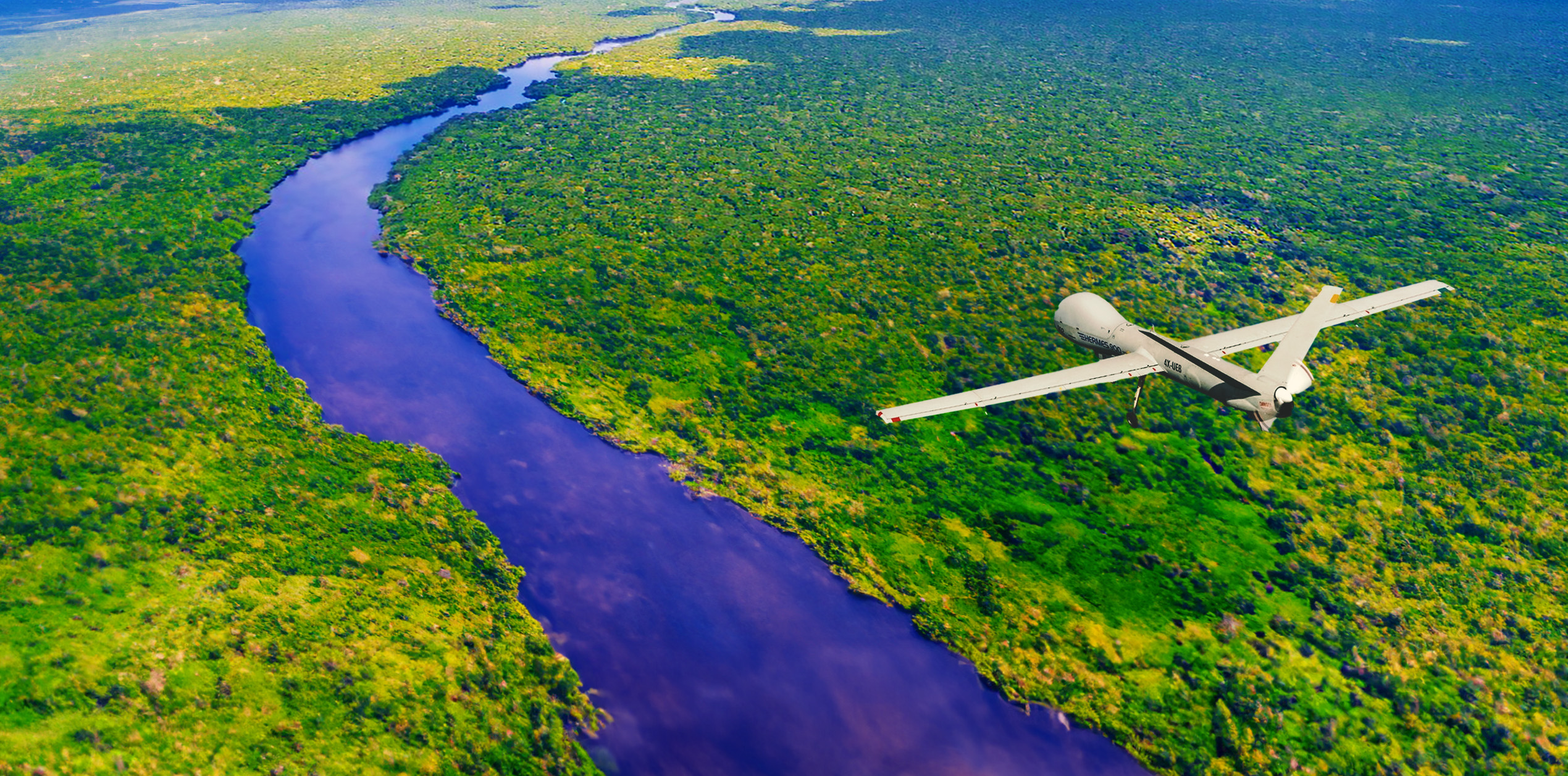
The Legal Amazon, with its more than 5 million km², imposes unique operational challenges: dense vegetation, hard-to-access areas, the presence of criminal organizations, and environmental crimes that threaten not only the biome but the integrity of the territory. In the face of this, constant, precise, and integrated monitoring is essential. And this is already a reality through Remotely Piloted Aircraft Systems (RPAS) and other advanced technologies developed in Brazil.
Persistent Surveillance: Sovereignty in the Air
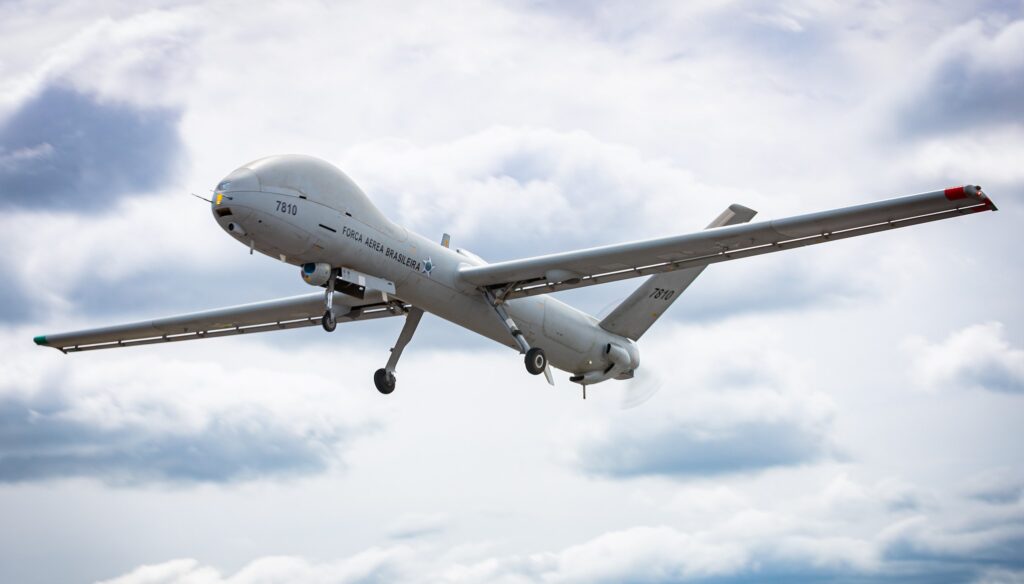
One of the great protagonists of this defense model is remotely piloted systems, such as the Hermes 900 (H900), a high-performance system supplied by AEL Sistemas and operated by the Brazilian Air Force (FAB). This is a high-endurance drone, capable of continuous flight for up to 36 hours and operation at high altitudes, ideal for surveillance missions in vast and remote areas like the Amazon rainforest and extensive land borders.
Equipped with electro-optical sensors, featuring state-of-the-art thermal and night vision, the H900 captures high-resolution images and videos, even under low visibility, adverse weather conditions, or at night. Its capacity to detect and track fixed or moving targets allows for the identification of illegal mining, areas of active deforestation, suspicious movements, and trafficking routes, offering persistent surveillance with precision and discretion.
Hermes 900 aircraft, of the Brazilian Air Force. — Photo: Sgt. Müller Marin/FAB.
The Hermes 900 also possesses the capability to carry modular payloads, making it a highly adaptable platform for different mission profiles, such as synthetic aperture radars or equipment designed for data gathering within the electromagnetic spectrum. The secure, real-time transmission of data collected by its sensors occurs via tactical data links, ensuring that critical information is available to support the decision-making process.
Furthermore, in the near future, the H900 and other high-value assets will be capable of integration into the Link-BR2 network, another system currently under development by AEL that will ensure data exchange among air, naval, and land platforms, as well as Command and Control centers. This new capability will establish an environment of heightened situational awareness, shared among all involved forces: Army, Navy, Air Force, Federal Police, IBAMA, and other security and enforcement agencies.
Real-World Examples: Joint Operations in Defense of the Amazon
The practical application of this technology was demonstrated in recent operations such as Operation Samaúma, coordinated by the Ministry of Defense and the Office of the Vice President of the Republic in 2021. The mission focused on combating illegal deforestation and suppressing criminal activities within the Amazon. The deployment of the Hermes 900 in this operation was decisive: the RPA operated over critical areas, transmitting real-time data that supported rapid and coordinated actions by ground forces.
Another example of application occurred within the context of Operation Verde Brasil 2, where aerial monitoring conducted with the aid of drones and manned aircraft contributed to locating illegal logging sites and clandestine airstrips utilized by criminal organizations.
Total Integration: Communication, Command, and Control
The true strength of these operations lies in technological integration, uniting air, land, and naval efforts. AEL develops communication systems for various platforms, such as the Software Defined Radio (SDR), which ensures secure and encrypted communication, enabling interoperability among the Armed Forces.
This technological synergy enables a comprehensive defense ecosystem: sensors detect, the UAV observes, Link-BR2 transmits, the SDR communicates, and command centers act upon precise, real-time data. The result is coordinated, agile, and effective performance, with reduced troop exposure and greater operational precision.
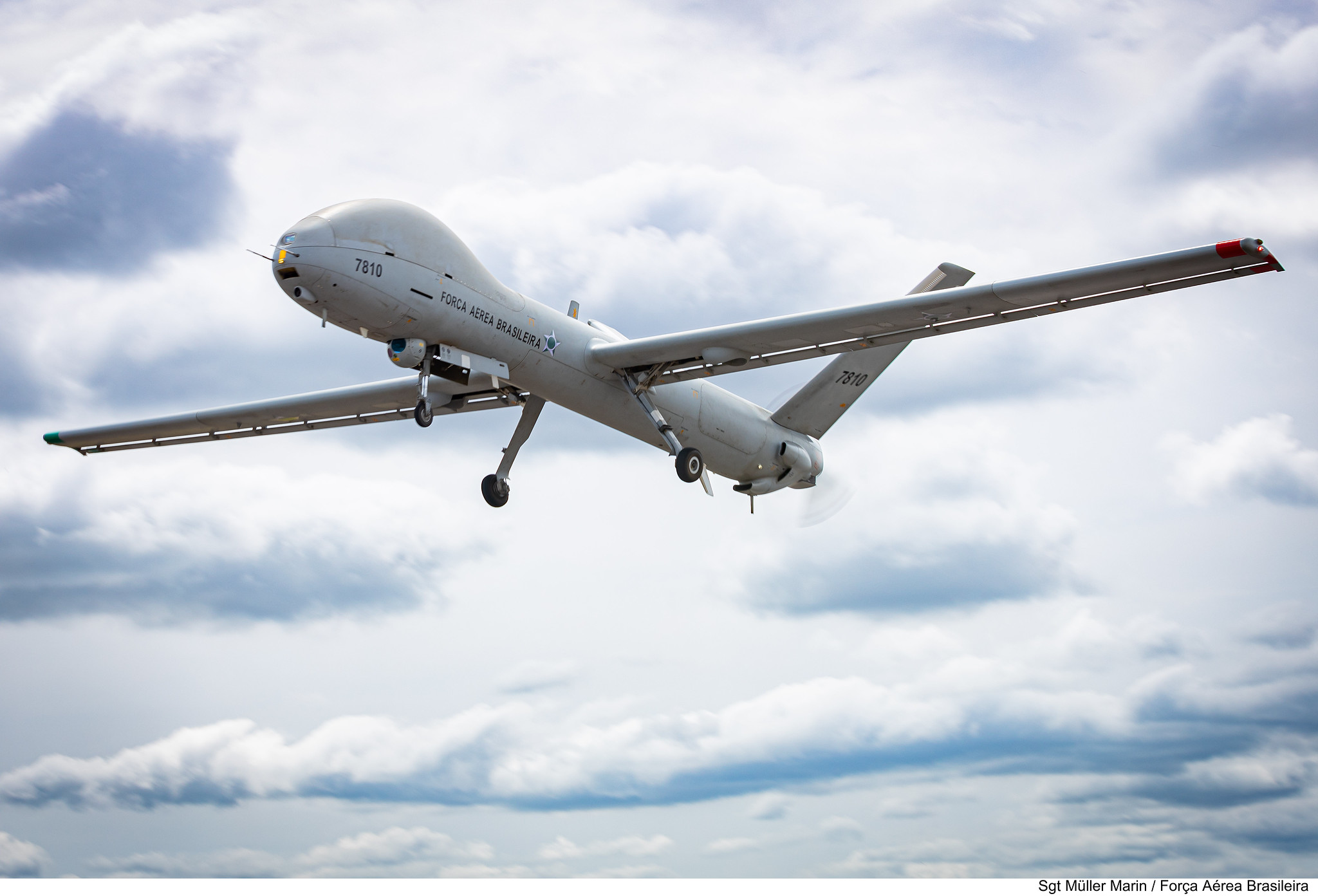
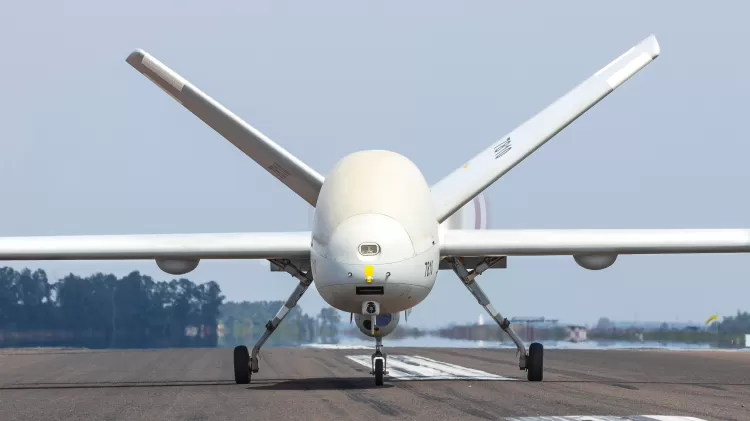
Hermes 900 aircraft, of the Brazilian Air Force. — Photo: Sgt. Müller Marin/FAB.
Far Beyond Monitoring
More than mere surveillance, the technological presence also fortifies humanitarian and logistical support capabilities in the Amazon region. These systems operated by the FAB have already supported rescue operations in isolated communities, environmental enforcement missions, and responses to climate emergencies, such as the 2024 floods in Rio Grande do Sul.
In disaster situations, these tools allow for the mapping of affected areas, locating victims, maintaining communication between rescue teams, and distributing critical information quickly and precisely — saving lives and optimizing available resources.
A Future of Sovereignty with National Technology
The importance of the Amazon extends beyond national borders. The Amazon biome is a strategic environmental asset for Brazil and the world, essential for global climate balance, biodiversity conservation, and the maintenance of water resources. Protecting this region is a responsibility shared among the State, society, and the international community.
By investing in technology aimed at environmental preservation, Brazil not only strengthens its sovereignty but also reaffirms its role as a global leader in the sustainability agenda.